

Homecare organizations play a critical role in delivering quality care to seniors, individuals with disabilities, and vulnerable members of our communities. Yet behind every successful homecare operation lies a complex network of administrative processes, compliance requirements, workforce management challenges, and regulatory obligations.
As homecare agencies grow, many discover that spreadsheets, paper files, emails, and manual processes are no longer sufficient.
1. Managing Employee Certifications
One of the most common challenges faced by homecare organizations is keeping track of employee certifications.
Organizations often need to monitor:
- First Aid Certifications
- CPR Certifications
- Professional Licenses
- Background Checks
- Specialized Care Training
When these records are stored across multiple systems or physical files, it becomes difficult to know which certifications are active, expiring, or missing altogether.
A missed certification can create compliance risks and affect service delivery.
2. Preparing for Audits
Many homecare organizations spend weeks preparing for audits.
Managers often need to gather:
- Employee records
- Training documentation
- Incident reports
- Policy acknowledgements
- Compliance records
When information is scattered across different locations, preparing for an audit becomes stressful, time-consuming, and expensive.
3. Staff Training Compliance
Ensuring employees complete required training is another major challenge.
Organizations must continuously monitor:
- Mandatory training completion
- Refresher courses
- Policy reviews
- Competency assessments
Without proper tracking systems, managers are often left manually following up with employees.
4. Incident Reporting and Documentation
Incidents are an unavoidable reality in healthcare environments.
Unfortunately, many organizations still rely on paper forms, email chains, or disconnected reporting processes.
This can lead to:
- Delayed reporting
- Missing information
- Lack of accountability
- Difficulty retrieving historical records
5. Policy Management
Policies are frequently updated as regulations evolve.
Organizations often struggle with:
- Distributing updated policies
- Confirming staff review
- Tracking acknowledgements
- Maintaining version control
Without a centralized system, organizations may not know whether employees have reviewed critical policy updates.
6. Workforce Coordination
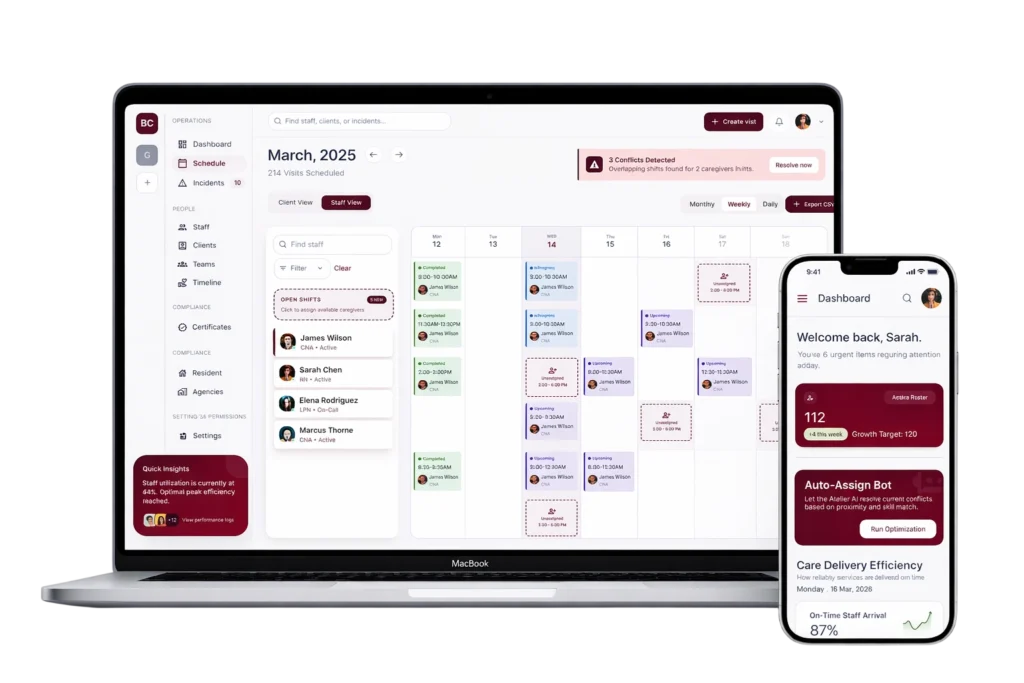
Managing schedules, assignments, and team communication becomes increasingly difficult as organizations grow.
Common issues include:
- Missed shifts
- Scheduling conflicts
- Poor communication
- Lack of visibility into workforce activities
The Cost of Manual Processes
These challenges ultimately result in:
- Increased administrative workload
- Higher compliance risks
- Reduced operational efficiency
- Increased stress on managers
- Lower visibility into organizational performance
As regulatory requirements continue to evolve, homecare organizations need modern tools that simplify compliance rather than adding to the burden.

Even if we do not talk about 5G (specifically), the security talent in general in the country is very sparse at the moment. We need to get more (security) professionals in the system.
Comments are closed.